


We are Proud Members of the Following

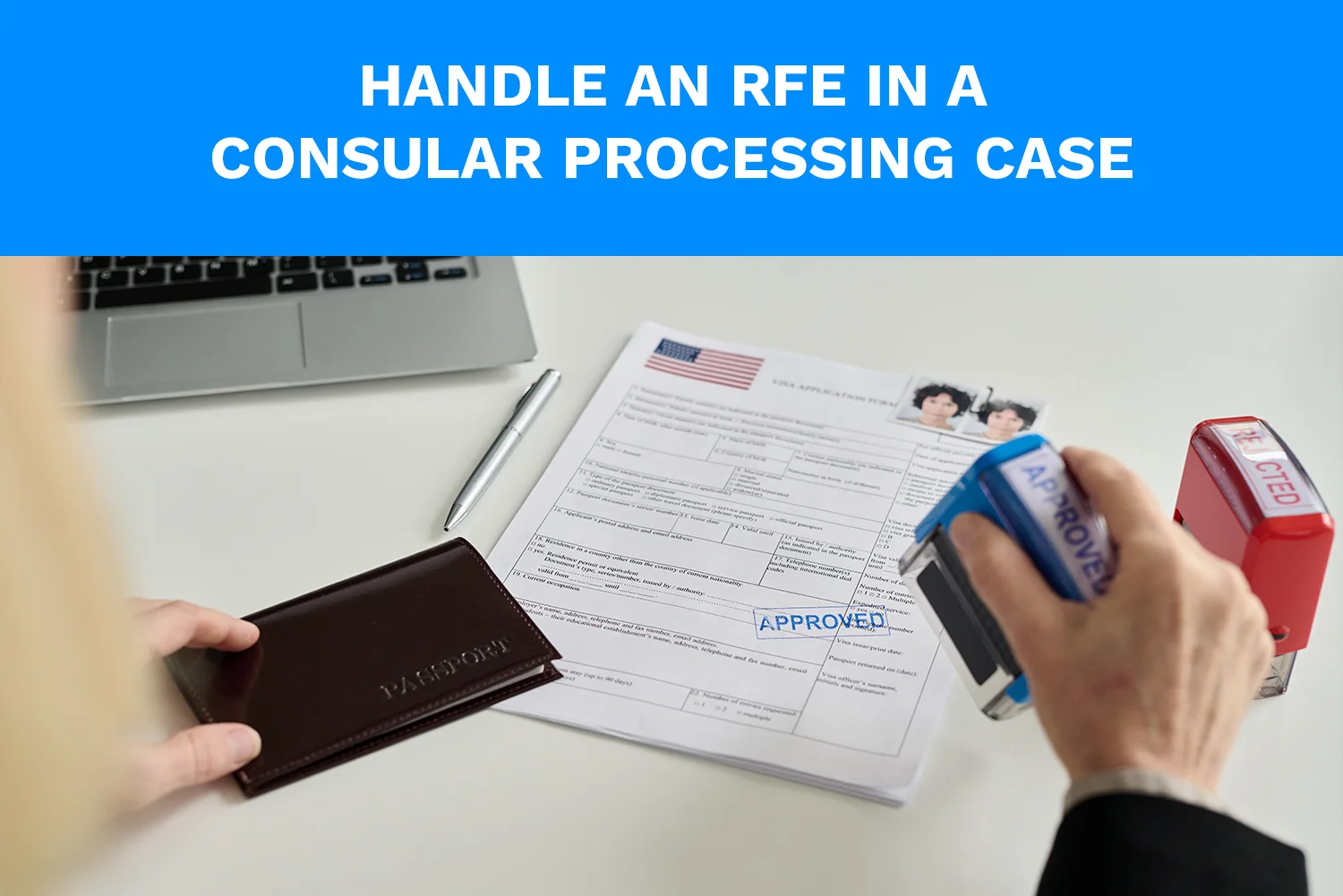
An RFE (Request for Evidence) from USCIS requests additional information or documentation from you before proceeding with your immigration case. It can be particularly stressful, taking up both your time and efforts in responding. Responding quickly and completely to an RFE is key, as failing to do so could jeopardize your application and prompt denial. Seek legal assistance when crafting your response. Here’s how to handle an RFE in a consular processing case.
What is the Requested Evidence?
An RFE from USCIS typically begins with a quote from immigration law about your type of visa application and then lists documents or information needed by them for review of your case, along with a timeframe in which they’d like your response submitted.
A thorough response increases your odds of being approved quickly for your immigration benefit, while lackluster responses could delay or deny them altogether. Seeking legal help with responding to a request for evidence might help ensure it addresses all USCIS’s concerns effectively.
Additionally, ensuring no missing documents are included in your submission is crucial to prevent delays. By adhering to these guidelines, you can enhance your chances of approval within the 12 week timeframe typically allocated for responding to such requests.
Steps to Take Immediately
When USCIS issues an RFE, you must act quickly to collect all the documentation and evidence they request. Consulting with an experienced immigration attorney may help review your case, gather necessary documents, and craft an efficient response packet for USCIS.
Carefully review this list to ensure all needed documents have been provided or if additional ones may be necessary. Organizing these in a response package, with the help of an experienced immigration attorney, would also be advisable so USCIS can easily find them.
Crafting a thorough RFE response is crucial, as it ensures that all the requested evidence, including any missing evidence, is included, increasing the chances of a favorable decision.

Common Mistakes to Avoid
Ensure the evidence submitted to the U.S. Citizenship and Immigration Services (USCIS) is complete and accurate, addressing all the requested evidence in the RFE. Responding thoroughly to an RFE can significantly increase your chances of approval; however, it’s important to avoid these common errors in your RFE response.
- Avoid providing unnecessary cover letters; focus on including only the required initial evidence.
- Ensure all requests in the RFE are addressed in full by submitting the necessary supporting documents.
- Avoid providing incomplete documents; carefully review your response to include all the required evidence.
- Respond within the allotted time limit to avoid denial from USCIS and ensure your request for evidence (RFE) response is timely.
- Organize your response package to make it easier for the USCIS officer reviewing your case to find all the requested documents and supporting evidence.
The USCIS officer reviewing your case will carefully examine the requested documents and any additional evidence submitted. Ensuring all requested documents are included and accurately presented is crucial for a successful RFE response.
Conclusion
Handling an RFE (Request for Evidence) in a consular processing case can be a challenging experience, but it’s an essential step in ensuring your visa application progresses smoothly. Always consult with an experienced immigration attorney to guide you through this process and ensure you meet all the requirements set by USCIS.

Contact Colavecchio and Colavecchio Law Office
If you’ve received an RFE or are navigating the complexities of consular processing, Colavecchio and Colavecchio Law Office is here to help. Our team of skilled immigration attorneys will work with you to understand the specifics of the RFE, gather the necessary evidence, and craft a comprehensive response to ensure your application is successfully processed.
With our expertise, you can confidently handle any challenges in your immigration journey. Contact us today for a consultation and let us guide you through every step of your visa application process.