

Colavecchio & Colavecchio
How to Handle Language Barriers in Interviews
- Competitive Prices
- High Success Rate
- Expert Lawyers
- Customer Centric
Book Your Consultation
We are Proud Members of the Following

Applying for a green card is a big moment. It represents stability, opportunity, and a fresh chapter in the United States. But when your primary language isn’t English, preparing for a green card interview can feel overwhelming. If you’re wondering how to handle language barriers in interviews, you’re not alone. Many green card applicants face similar language challenges, and the good news is, there are effective strategies to help you prepare and feel more confident. This guide walks you through the most practical, human ways to prepare, communicate, and navigate the green card interview,even if English isn’t your native language.
Understand What the Interview is About
First things first: the green card interview isn’t meant to trip you up. The officer is not expecting you to speak perfect English. The goal is to assess your eligibility, review your green card application, and ask about your personal background, family, job, or relationship (depending on how you’re applying).
You’ll be asked common interview questions like:
- What’s your full name and date of birth?
- What is your current address?
- What is your job title?
- How did you meet your family member or spouse?
You don’t need to use fancy words. You just need to communicate effectively and show that you understand what’s being asked in your immigration interview.
IMMIGRATION LAW
OFFICE HOURS
Mon: 9:00 AM - 3:30 PM
Tue: 9:00 AM - 3:30 PM
Wed: 9:00 AM - 3:30 PM
Thu: 9:00 AM - 3:30 PM
Fri: 9:00 AM - 3:30 PM
Sat: Closed
Sun: Closed
Request an Interpreter If Needed
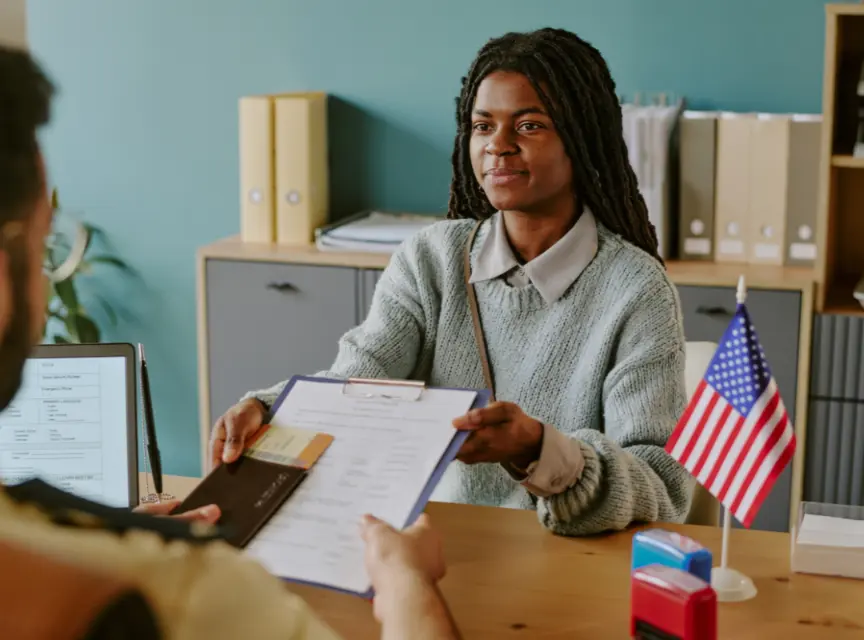
If speaking or understanding English is difficult, you have the right to request an interpreter. This is an important step in learning how to handle language barriers in interviews. While some green card interviews are conducted in a common language between the applicant and the officer, not everyone has that option.
The Citizenship and Immigration Services (USCIS) website offers information about using interpreters at your interview. If you bring your own interpreter, it should be someone fluent in both English and your native language, but not a family member involved in your case.
Don’t wait until the day of your green card or I-485 interview to think about this. You can inform the USCIS office in advance that you’ll bring an interpreter, or follow their guidelines for arranging one. The key is making sure you and the interviewer are on the same page.
Practice With a Friend or Legal Professional
Practice makes a big difference. One of the best ways to reduce anxiety is to do mock interviews. You can ask a friend, family member, or an immigration services professional to help you simulate a real interview.
During the practice, go over common questions, review your necessary documents, and get used to answering out loud. Practicing can also help you:
- Build confidence in your language skills
- Recognize what kind of clarification you might need
- Learn how to avoid jargon or overly complicated answers
Even if you don’t speak English fluently, showing effort and preparation speaks volumes.
Know Your Story,And Practice Telling It
One of the most helpful tips? Know your own story well. That includes your immigration history, how you got your visa, where you’ve lived, your educational background, your job, and your relationship if you’re applying through marriage.
During the green card interview, the officer may ask for specific dates, events, or documents. They’re checking for consistency. If you’re familiar with your own journey and can provide details confidently,no matter the language,you’re in a stronger position.
Keep It Simple
Language gaps can become more difficult when you try to use long sentences or big words. Don’t feel pressure to speak like a lawyer or native speaker. Speak clearly, answer directly, and use simple, short sentences.
Example:
Question: What do you do for work?
Answer: I work as a cook in a restaurant. I’ve had the same job for three years.
That’s better than saying: “Professionally, I am employed in a culinary capacity at an establishment that specializes in fine dining.” Keep it real. You’re not being graded on your vocabulary.
Don’t Be Afraid to Ask for Clarification
If you don’t understand a question during the green card interview, it’s okay to say so. You’re not expected to be perfect, and asking for clarification shows that you want to get things right.
You can say:
- “I’m sorry, can you please repeat the question?”
- “Can you explain what that means?”
- “I don’t understand this word. Can you say it another way?”
Many applicants feel pressure to pretend they understand everything. Don’t. Misunderstandings can lead to giving wrong answers, which may create concerns or delays.
Bring the Right Documents,And Know Them Well
Your green card interview isn’t just about conversation. It’s also about verifying your identity, history, and current status using necessary documentation.
Make sure to bring:
- Original copies of your green card application
- Birth certificates, visa information, marriage licenses
- Proof of employment or education
- Necessary documents supporting your eligibility

label them clearly, review them beforehand, and practice how to describe each one. You can also use these to support your answers if language becomes an issue during your green card process.
Stay Calm & Take Your Time
It’s completely normal to feel nervous before or during the green card interview,especially if you’re facing language barriers. One of the simplest things you can do is pause and take a few deep breaths before speaking.
Remember, you don’t have to rush. You can take a moment to think, repeat the question out loud to yourself, and then answer. Slowing down can improve your comprehension and reduce mistakes.
Focus on Communication, Not Perfection
Many applicants get caught up in trying to speak “correct” English instead of focusing on being understood. The goal of the interview isn’t to impress the interviewer with your grammar. It’s to communicate clearly and answer questions truthfully.
Even if your grammar isn’t perfect, or if you pronounce something wrong, you can still be successful if the officer understands you. That’s what matters most.
Use Real-Life Examples
When you’re explaining something complicated,like your relationship timeline, work history, or a past address,try using examples to make it easier.
For instance:
Question: How long have you lived with your spouse?
Answer: We moved in together in March 2021. I remember because we had just finished celebrating her birthday.
Small details like that show your story is real and help make your conversation more natural.
Prepare Emotionally & Mentally
Facing an interview in a second or third language can be challenging, even intimidating. Preparing mentally is just as important as reviewing your paperwork.
- Talk to other immigrants who’ve been through the process.
- Ask your legal or immigration services provider what to expect.
- Remind yourself that you’ve made it this far,this is just one more step.
Many people pass their interview even if their language skills aren’t perfect. Preparation and honesty are more important than fluency.
Bring a Trusted Interpreter,But Know the Rules
We touched on this earlier, but it’s worth repeating: interpreters can make a huge difference when language barriers are significant.
But not just anyone can serve in that role of green card assistance.
Here’s what to know:
- The interpreter should be fluent in both your native language and English.
- They must not be directly involved in your green card application.
- They must take an interpreter’s oath and remain neutral.
Using someone you trust can help you feel more confident, but it’s also important that they don’t speak on your behalf,they’re only there to translate.

Final Thoughts
Facing a green card interview when you don’t speak English fluently can feel like climbing a mountain, but with the right mindset and preparation, you absolutely can do it.
Contact Colavecchio & Colavecchio Law for Green Card Help
Need help preparing for your green card interview? Colavecchio & Colavecchio Law can help! Our immigration services professionals can help you create a plan, go over your paperwork, and prepare for success. Contact us today to schedule a consultation with our immigration attorneys.